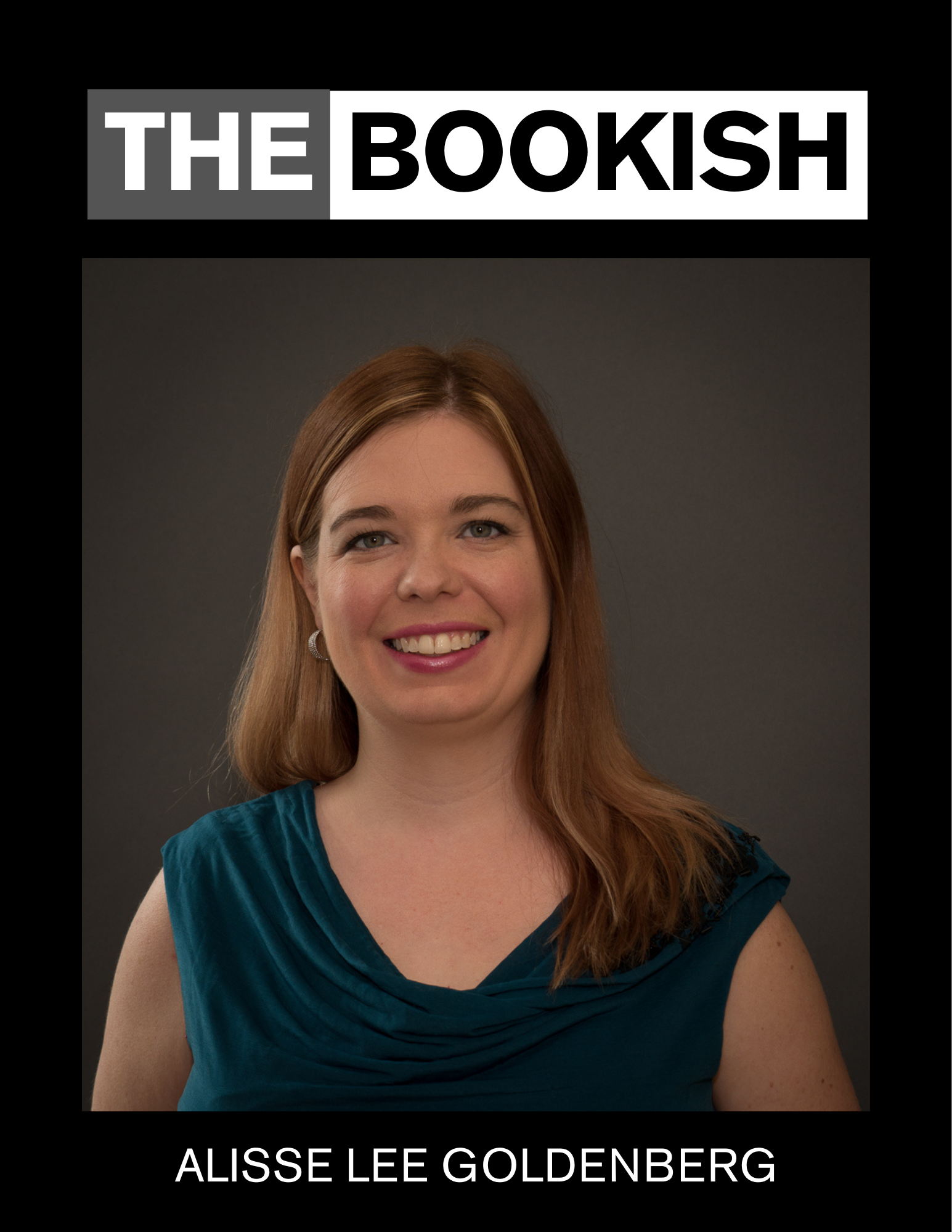
Alisse Lee Goldenberg is an award-winning author who writes fantasy, horror, young adult, and children’s stories. She uses her academic background in education and the arts, as well as her lifelong interest in fantasy and folklore, to give her works structure and inspiration. Through her work on several TV shows and in the arts, she has written stories that look at identity, bravery, and how stories can change people. Alisse will talk about how she writes, how her writing has changed over time and across genres, and the things that have moulded her writing voice.
Alisse, thank you for joining us today. To begin, could you introduce yourself, describe what you do, and share what you aim for in your work?
Thank you so much for having me here. I am Alisse Lee Goldenberg, author of YA Fantasy Fiction, YA Fantasy Romance, YA Contemporary books, and Middle Grade literature. I am also a playwright, and mom of triplets, which also makes me a bit of a taxi driver, and a current sports mom.
Your writing spans several genres, including children’s literature, horror, and young adult fantasy. How did your interests in these areas develop, and what drew you to explore each one?
I typically tend to write in genres I love to read. If it doesn’t hold interest for me, I’m not really going to want to play in that sandbox. What’s been happening lately is that my kids will hand me books that they’ve loved with the demand for me to “try this,” and I’ll take the book and read it. It’s as if I have my own built-in book club at home. It’s gotten me to read and try authors and books that I might not have before. I love it. I’ve also been drawing inspiration from what’s going on in my kids’ lives. They just started high school this year, and it’s been a time of change and growth, and to look at that and not feel inspired is impossible.
You have studied fantasy and folklore in depth. How have these areas of interest influenced the themes, symbolism, or structures within your stories?
Specifically, with The Dybbuk Scrolls Trilogy, folklore is the main influence and theme that’s interwoven throughout the entire series. I approached the books from the place of folklore and world building first. Everything else fell into place after Hadariah was set and dreamed up. It was a writing exercise that was the total opposite of anything else I’ve done. It came to me from a place of “what if the stories I grew up on were all true,” and I ran with that. At its core, the entire world of Hadariah is a love letter to my culture and to my family. These are the folktales and creatures that I grew up with, that my grandmother gifted to me when she was living with us. It’s a way to keep her memory alive.
With degrees in education and fine arts, how do those academic experiences shape your approach to storytelling, character development, or world building?
I’m a very visual person. My books are movies in my mind, and I write down what I see. It’s the same way I approach a painting or a sketch. I see it, and I do my best to replicate it on paper or on canvas. The medium may change, but the process always starts with a picture or a thought. Part of my fine arts degree was choosing courses that interested me. My actual major was Fine Arts Cultural Studies, so I took courses in everything from portrait painting to Apocalyptic Science Fiction, from Children’s Literature to Horror Films. I learned a lot about character development and world building from people who were experts in the field. It was an incredible time where I got to experiment and try new things.
Across your body of work, are there particular creative milestones or turning points that significantly influenced your growth as an author?
I think when I branched out and started writing plays it became really interesting. There is no real space there to write description. I’m so used to writing about a setting or a character’s thoughts. Scripts have no real place to put that. It was a way to strip everything down and approach character differently. I had to adapt and really think about if I was saying what was most important.
Writing multiple series requires sustained focus and long-term vision. What does your creative process look like when you are developing new characters or mapping out a larger narrative arc?
When it comes to a series, I know in book one who’s going to arrive in later books. The plan needs to be there. I have notebooks of character sketches and family trees all planned out for everyone. The plan is in place from day one. Of course, plans can change, and often do, but it feels so much less daunting to know that there is order among the chaos.
With The Dybbuk Scrolls, I knew that the second book would strip away what Carrie felt made her strong: her friends. It’s an interesting puzzle—who are you without your people? My other series, The Sitnalta Series, is about a princess coming of age and coming into her own. The books chronicle her growth and her rise, not just to power, but to fulfilling her own potential. That, in itself, is a journey and something worth writing about. The sequel series to that, The Children of Colonodona, follows a new generation in that kingdom, and what it looks like when they don’t like how power is handled or handed down. Maybe there’s another way. The first book of that series (The Wizard’s Apprentice) was just published.
Recognition and awards can mark important moments in a creative career. Could you share the achievements you are most proud of and reflect on what that recognition has meant to you personally and professionally?
My son Joseph and I wrote a book together—Lucky at Bat. That was an achievement I am so proud of. And the fact that that novel was awarded the Gertrude Warner Book Award for Middle Grade Fiction was the cherry on the sundae. He and I got to travel together to the awards banquet, and he got to see and experience firsthand what I do. That was a very special time. It’s not often I get to share so much with my kids.
Reader engagement often reveals unexpected insights about a story. What kinds of responses from readers have stayed with you or influenced how you think about your audience?
I think that my favorite comments have come from my kids. My daughter has been reading through my books now that she’s old enough. Her favorite one so far has been The Ghost in the Garden, though she’s now working through The Sitnalta Series. I love the questions she asks as she reads, and her ideas on what’s going to happen next are fun to hear. I did get one comment on Amazon where a reader declared me their new favorite author! That was lovely to read, though I do try to avoid seeking out reviews. My kids pointed that one out to me.
Many authors return to certain ideas or values throughout their work. What themes do you find yourself revisiting, and why do they continue to matter to you?
I am always revisiting the concept of a child breaking free and forging their own path. In essence, that’s what we’re teaching kids to do. If they’re not growing and learning, then we’re failing. In time, our kids are going to be inheriting this mess of a world. What are we leaving them? We need to provide them the tools to lead, to help, and to be the best versions of themselves they can be. That’s at the heart of most of the stories I write. Sometimes the right thing is the hardest thing a person can do, and that includes standing up to those in charge—be that a parent, a leader, or a king (in some cases).
As your writing continues to evolve, are there creative directions, formats, or genres you are interested in exploring in the future?
I love the live nature of theatre. I started as a performer in community theatre. It’s actually how I met my husband. Showmances are real! I love the instant gratification of a live audience’s reactions to what happens on stage, and I love how every performance can shift and change, even as the script remains the same. Right now, my play The Strings of the Violin, which is based on The Song of Hadariah, is premiering this month with The Riversong Players in Almonte, Ontario. I have links to that on my website.
If you were to write your own bio, what would you say? And as your work evolves, what kind of impact do you hope it has?

I hope that my work inspires people to write their own stories. I was inspired by so many writers on my way to where I am now. I hope people see the themes and ideas in my work, and, like my characters, fight to do the right thing. I truly believe that everyone has that potential within.
As for my bio, my best work in this life is my three kids: Joseph, Phillip, and Hailey—they can all speak for themselves.
Related

The Song of Vengeance by Alisse Lee Goldenberg
What if everyone you love vanished and the world insisted they never existed? Discover how memory, magic, and vengeance collide in The Song of Vengeance by Alisse Lee Goldenberg. Read on.
Share Your Insights
Feel free to share your answers in the comments below:
- What part of this post resonated with you the most, and why?
- How does this post connect with your own journey?
- Do you have any other bookish insights you’d like to share?
Disclaimer
The content in The Bookish Magazine is for general informational and literary purposes only and does not constitute professional advice. Opinions expressed are those of the authors and do not necessarily reflect the views of the publication. For full details, please read our complete disclaimer, terms, and policies on our website.
Helpful Shortcuts
- About
- Books and Blogs
- Contact Us
- Disclaimer, Privacy Policy, and Terms of Service
- Editorial Guidelines
- Magazine
- Submissions
- The Bookish Awards
- Voluntary Contribution Policy


