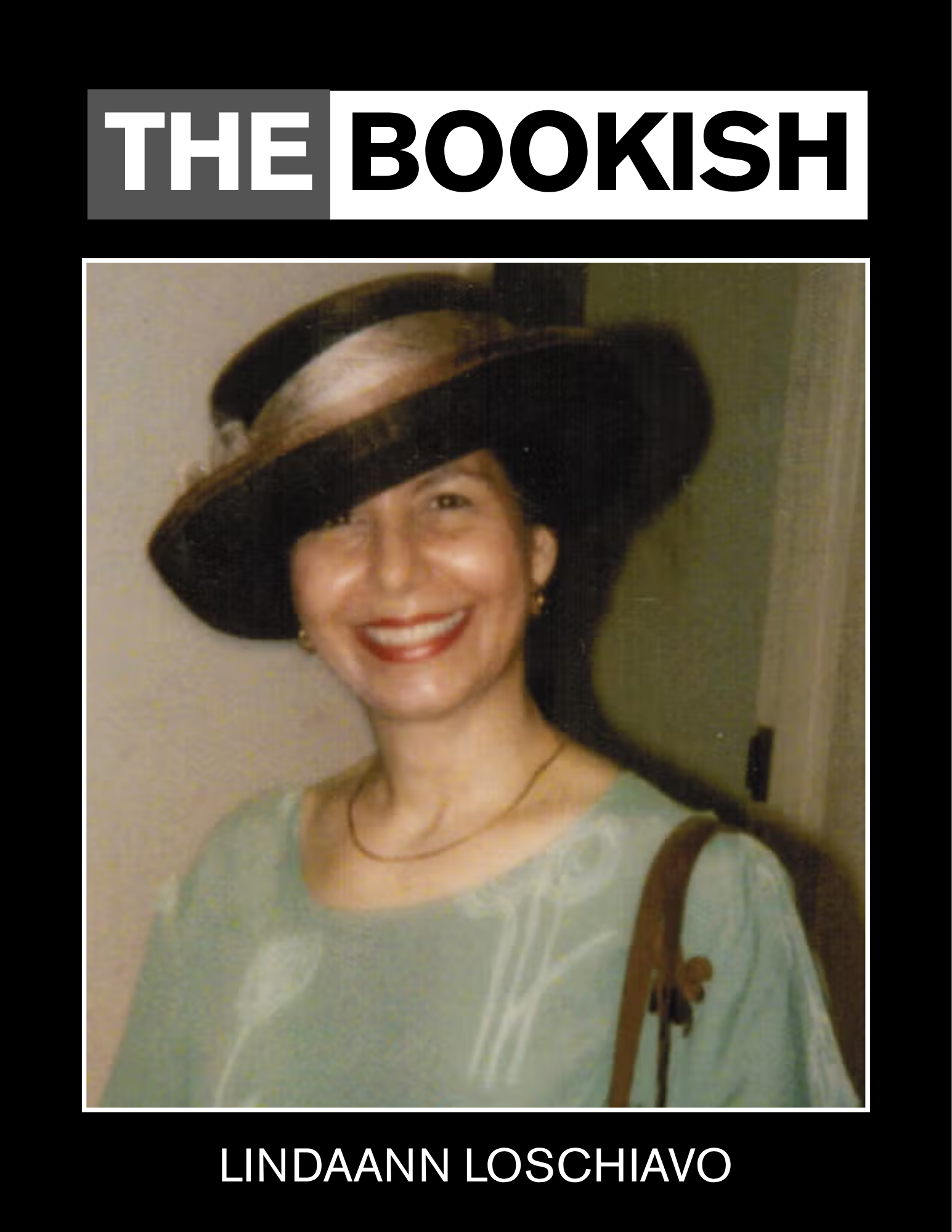
This interview explores the creative and technical foundations behind LindaAnn LoSchiavo’s work, focusing on her approach to folklore-inspired poetry, her professional development, and the craft principles that guide her writing. Rather than highlighting commercial elements, the conversation encourages reflection on artistic process, discipline, research, and the ways mythic subjects can intersect with contemporary life. The objective is to offer readers insights into a writer’s long-term creative journey, her methods for integrating tradition with innovation, and her perspective on sustaining a meaningful literary practice.
Editor’s Note: This interview discusses vampire folklore, horror, death, grief, suicide-related literary works, and violence against women as subjects of literary and creative expression. These references are presented in an artistic and contextual manner and do not promote harmful behaviour.
LindaAnn, thank you for joining us. For readers meeting you for the first time, could you introduce yourself, your background, and what you aim to explore through your work?
Thank you for having me. I’m a New York City poet with deep roots in Greenwich Village and an Italian-American heritage that traces back to Naples and the Aeolian Islands, foreign locales steeped in folklore, mystery, myth, and superstition. Currently, I belong to the Horror Writers Association, the Science Fiction Poetry Association, the British Fantasy Society, and the Dramatists Guild, which tells you something about how my imagination travels between genres rather than making a home inside one.
“Vampire Verses” draws upon the vampire mythos, obviously, and includes folklore and superstitions about death. The book has two sections: the first is a set of contemporary, often wry encounters with the undead — a vampire on a dating app, a vampire taking advantage of a realtor’s open house — and the second is a direct tribute to Bram Stoker, closing with a Golden Shovel built from a line in Montague Summers’s 1928 study of vampire folklore.
What I’m after throughout is the vampire not as costume but as a way of talking about grief, loss, transformation, contagion, appetite, and other things a culture is too frightened to say plainly. For example, my Carmilla poem was inspired by the COVID lockdown, a mysterious disease that caused widespread alarm and fatalities.
When approaching a project grounded in folklore and mythic traditions, what initially draws you to these narratives, and how do you decide which elements resonate enough to build new work around?
I’m drawn to the narratives that still have unfinished business — the ones where the “official” version glosses over something a careful reader can feel is still raw. For “Vampire Verses,” that meant going past the obvious Transylvanian source material.
I went to Irish folklore for the Dearg Due, a lesser-known figure whose legend is really about a woman starved by an unhappy marriage and given supernatural agency only in death. I went to real Romanian poetry, working a few lines of Mihai Eminescu into a poem about a modern catfishing scheme, because the nineteenth-century original and the twenty-first-century scam turned out to be the same seduction wearing different clothes. And in the book’s second section, I went directly to Stoker’s own “Dracula’s Guest” for an echo-verse poem built around the German legends of Walpurgis Night.
I decide what’s worth building new work around by asking whether a piece of folklore is doing emotional labor that’s still relevant — whether it’s a mask for appetite, loneliness, or predation that hasn’t gone away, just changed its name.
Many poets have a distinct process for transforming research, observation, or personal curiosity into creative output. How would you describe the steps you take from initial concept to polished piece?
Research first, form second, then the real work — cutting. For instance, “The Tale of the Vintner’s Daughter,” which opens “Vampire Verses,” is a good example of that whole arc. The concept started as a deliberately misquoted echo of the opening line of “Pride and Prejudice” — I wanted a courtship narrative told entirely through the eager, gossipy logic of a small town sizing up a newcomer, a wealthy bachelor with inherited property, before slowly letting the reader realize the bachelor is Count Dracula. That meant researching actual vineyard labor and nineteenth-century courtship customs closely enough that the dread could arrive through domestic, unglamorous detail — hands calloused from tying vines, a family fortune built on soil and sunshine, and townspeople assessing a marriage prospect — rather than through gothic atmosphere alone.
Once I have the material, I ask what form the emotional shape of the piece actually wants. Then I draft, and then I do what I think is the least glamorous but most important part: going back and interrogating every repeated word, every rhyme doing decoration instead of work, every ending that resolves too easily. With “The Tale of the Vintner’s Daughter,” a lot of the editing was pacing — making sure the reader’s suspicion built at exactly the right rate, so the final image lands as inevitability rather than surprise.
Your portfolio spans multiple forms and styles. What motivates your interest in experimenting with structure, and how do you determine which form best aligns with the emotional or thematic core of a piece?
“Vampire Verses” is one of the best showcases of this instinct that has been published. Reviewers who read the advance copy specifically called out its genre-fluid embrace of forms such as the Fibonacci, Echo Verse, haiku, Golden Shovel, villanelle, sonnet, prose poem, and freer decasyllabic lines. Form is not decoration for me; it’s argument.
A villanelle’s obsessive repetition, in “Villanelle: Defined by a Stygian Realm,” enacts exactly the kind of denial a woman talks herself into with a dangerous new lover — the poem’s compulsive return to the same lines mirrors how she keeps circling back to “he seemed refined” even as the sinister evidence mounts. A prose poem like “Oupire” lets a single unbroken paragraph carry the disorientation of someone in genuine danger, with no line breaks offering the reader — or the narrator — anywhere to breathe.
The Golden Shovel that closes the book, built from a line in Montague Summers’s early vampire scholarship, was a deliberate choice to let the collection’s last word come from the folklore itself rather than from me. Therefore, the real question I ask isn’t “what form do I feel like using?” — instead it’s “what does this subject’s shape demand?” The constraint is never the point; it’s the tool that forces the real feeling to the surface.
Creative longevity comes from sustained discipline. What practices or routines have helped you maintain momentum in your writing life, and which habits have you found most essential for professional growth?
The acknowledgments page of “Vampire Verses” offers a backstage glimpse into the actual discipline in action; individual poems first appeared in Bewildering Stories, Quail Bell Magazine, Black Poppy Review, Spectral Realms, Star*Line, and a Querencia Press anthology, among others — some of these written years before the book itself existed.
That’s not incidental. Every poem gets submitted individually first, tested against an editor’s judgment, published or rejected, sometimes revised again, and only then does it get slotted into a book-length project. The book is the last stage, not the first.
The habit I’d call most essential, though, is ruthlessness about repetition and contradiction in my own drafts. Moreover, I enjoy resuscitating old forms such as the Chant Royal, the Glosa, and Echo Verse, which evolved as a poetic device and style during the 16th and 17th centuries in France, Italy, and England — and has fallen out of favor because it’s difficult to write. My most important routine, however, is searching for submission opportunities and submitting my writing every day to literary magazines.
You’ve been recognized for your contributions within your field. Could you share some milestones or honors you’ve received over the years, and explain how these acknowledgments have influenced your perspective on your craft?
“Vampire Verses” itself was recognized as a Bookish Award Winner by The Bookish Magazine as well as by OneTribune, which honored my chapbook with an Excellence in Literature Award.
These accolades join a small shelf of other honors. To wit, an Elgin Award for “A Route Obscure and Lonely,” the Chrysalis BREW Project’s Award for Excellence and The World’s Best Magazine’s Book of Excellence Award for “Always Haunted: Hallowe’en Poems,” a Spotlyts Story Award for “Apprenticed to the Night,” and the Voyages in Verses Book Award and Chrysalis BREW Seal of Excellence for “Cancer Courts My Mother,” which also achieved Finalist status from the Eric Hoffer Award judges. Additionally, “Always Haunted: Hallowe’en Poems” achieved recognition as a 3rd Place Finalist in Chrysalis BREW Project’s Readers’ Choice Awards, 2024–2025.
What ties these milestones together is that each of those books — “Vampire Verses” included — trusted its formal ambition completely rather than hedging toward accessibility. That has shaped how I approach every new project since: don’t soften the formal reach to make a book more “approachable.” The reach is usually what people respond to. Associating with other formalists and horror poets through HWA and SFPA membership has mattered just as much as any single honor — it’s what keeps the work accountable to craft standards, too, rather than following the trend towards generic free verse.
Many readers are fascinated by the intersection of traditional storytelling and modern experiences. How do you balance honoring historical sources with shaping work that speaks to contemporary audiences?
I try never to let historical accuracy become an excuse for distance. “When Carmilla Returns, Styria Is Different” is my clearest example in this book — I took Sheridan Le Fanu’s 1872 vampire and dropped her back into her own Styria, except the region is now marked by pandemic-era emptiness: shuttered trams, a population changed by disease in ways she has to relearn.
The historical source gave me the character and her hungers; the contemporary moment gave me the actual argument, which is that a predator built on old superstition doesn’t disappear when the world modernizes, it just recalculates. “Dating the Undead” does something similar from the other direction — Count Dracula runs a modern dating profile, quoting real lines of Eminescu’s poetry at a college student who reads them as flattering nonsense until it’s nearly too late.
My rule of thumb for teasers and introductions is that I never spoil the ending and I never lean on a biography readers can already find on Wikipedia. Instead I look for the one line in a poem that names something the reader has felt but never had words for, and build outward from that interior experience. That’s usually where “traditional” and “contemporary” turn out to be the same vibe — but wearing different clothing.
Visual art accompanies some of your projects. What role do images — whether illustrations, film stills, or real-world observations — play in your creative decision-making?
Images are woven into how I conceived this particular book, not bolted on afterward. “Vampire Verses” is a full-page-illustrated collection — Giulia Massarin and Erin Caldwell provided the interior artwork, Jennifer Horgan did the cover art and book design, and Ekaterina Orlovskaya created my fantasy author portrait with a vampire. Each poem was written knowing it would be paired with a facing image, which changes what a poem can leave unsaid on the page — the illustration can carry a beat of tone or humor the text does not have to spell out. “A Vampire Joins the Playboy Club,” for instance, is already darkly comic on the page, and knowing an illustration would sit alongside it let me trust the poem’s understatement rather than over-explaining the joke.
Years ago, books often included line drawings or woodcuts, which added the visual poetry. The text and the art talk to each other, creating a new world together. This is the experience I want to share with my readers.
Writers often accumulate insights over time. What lessons or philosophies about creativity, discipline, or artistic purpose have become most important to you, and how did you arrive at them?
The biggest lesson is that a title should withhold resolution and reward a careful re-reading, not summarize the poem.
The second is that tonal range is a strength, not an inconsistency to smooth out. Reviewers who read an advance copy of “Vampire Verses,” for example, specifically flagged the book’s shifts between the eerie and the ironic — sometimes within the same section — as its real strength. That confirmed something I already suspected: readers don’t need a single consistent mood to trust a collection. They need to trust that every shift in tone is deliberate.
The third is that rejection is nothing to be ashamed of. My mantra is: write, submit, don’t quit.
For readers who aspire to develop their own artistic voice, what constructive advice or practical exercises would you recommend to help them cultivate originality and resilience?
Master the poet’s toolbox. Learn the strict forms before you decide you’ve outgrown them.
A villanelle’s repetitions, a Golden Shovel’s borrowed line, a nonet’s syllable count — these aren’t hoops to jump through, they’re diagnostic tools. If a poem falls apart under a formal constraint, that usually means the underlying idea perhaps was not as cohesive as you thought.
A practical exercise beyond the single poem: once you have enough finished work, shape a collection by skillfully using a narrative arc. Analyze the structure of contemporary poetry books to understand how the poet ordered this material to maximize its strengths.
As one example, rather than using a chronological order, “Vampire Verses” was split into two clearly named parts — vampire encounters with pop culture in the first half, a direct tribute to Stoker and the Victorian Era in the other — and building that architecture shifted the mood from poem to poem. A manuscript with an accidental structure reads as a miscellany, an aimless cabinet of curiosities. In contrast, a manuscript with an intentional arc reads as a finished book.
For resilience: submit individual poems to journals regularly before you ever think about a book, and expect a lot of rejection along the way. Most poems in “Vampire Verses” found a home in a magazine or anthology first — some proof that the work held up outside the shelter of the collection — before it ever became part of a bound book with a cover and two awards attached to it.
If you were to write your own bio, what would you say? And as your work evolves, what kind of impact do you hope it has?
Native New Yorker LindaAnn LoSchiavo, an award-winning member of British Fantasy Society, HWA, SFPA, and The Dramatists Guild.
She released three titles in 2024: “Always Haunted: Hallowe’en Poems” (Wild Ink), “Apprenticed to the Night” (UniVerse Press), and “Felones de Se: Poems about Suicide” (Ukiyoto).
Her momentum continued into 2025 with two acclaimed new releases: Cancer Courts My Mother (Prolific Pulse Press) — winner of the BREW Seal of Excellence and the Voyages of Verses Book Award — and Vampire Verses (Twisted Dreams Press) — winner of the Excellence in Literature Award and The Bookish Reader’s Pick Award.
Forthcoming: “Dracula Before Stoker: The Prequel” (HallöwHartt Püblishing, 2026) and “Past Tense: Portraits and Poems of Suicides” (Prolific Pulse Press, 2027).
Book accolades include the Elgin Award, Chrysalis BREW Project Awards, The World’s Best Magazine’s Book of Excellence Award, Spotlyts Story Award, Voyages in Verses Book Award, Excellence in Literature Award, and The Bookish Reader’s Pick Award.
Related

Book Review: Vampire Verses by LindaAnn LoSchiavo
Have you ever wondered why certain stories feel like they’re tapping on the inside of your memory, even when you know you’ve never lived them? This piece explores that sensation—if you read it fully.
Keep reading
Cancer Courts My Mother by LindaAnn LoSchiavo
Have you ever asked yourself why some memories stay loud even when the world grows quiet around them? This piece follows one writer who learns the answer—if you read on.
Keep readingShare Your Insights
Feel free to share your answers in the comments below:
- What part of this post resonated with you the most, and why?
- How does this post connect with your own journey?
- Do you have any other bookish insights you’d like to share?
Disclaimer
The content in The Bookish Magazine is for general informational and literary purposes only and does not constitute professional advice. Opinions expressed are those of the authors and do not necessarily reflect the views of the publication. For full details, please read our complete disclaimer, terms, and policies on our website.
Helpful Shortcuts
- About
- Books and Blogs
- Contact Us
- Disclaimer, Privacy Policy, and Terms of Service
- Editorial Guidelines
- Magazine
- Submissions
- The Bookish Awards
- Voluntary Contribution Policy


