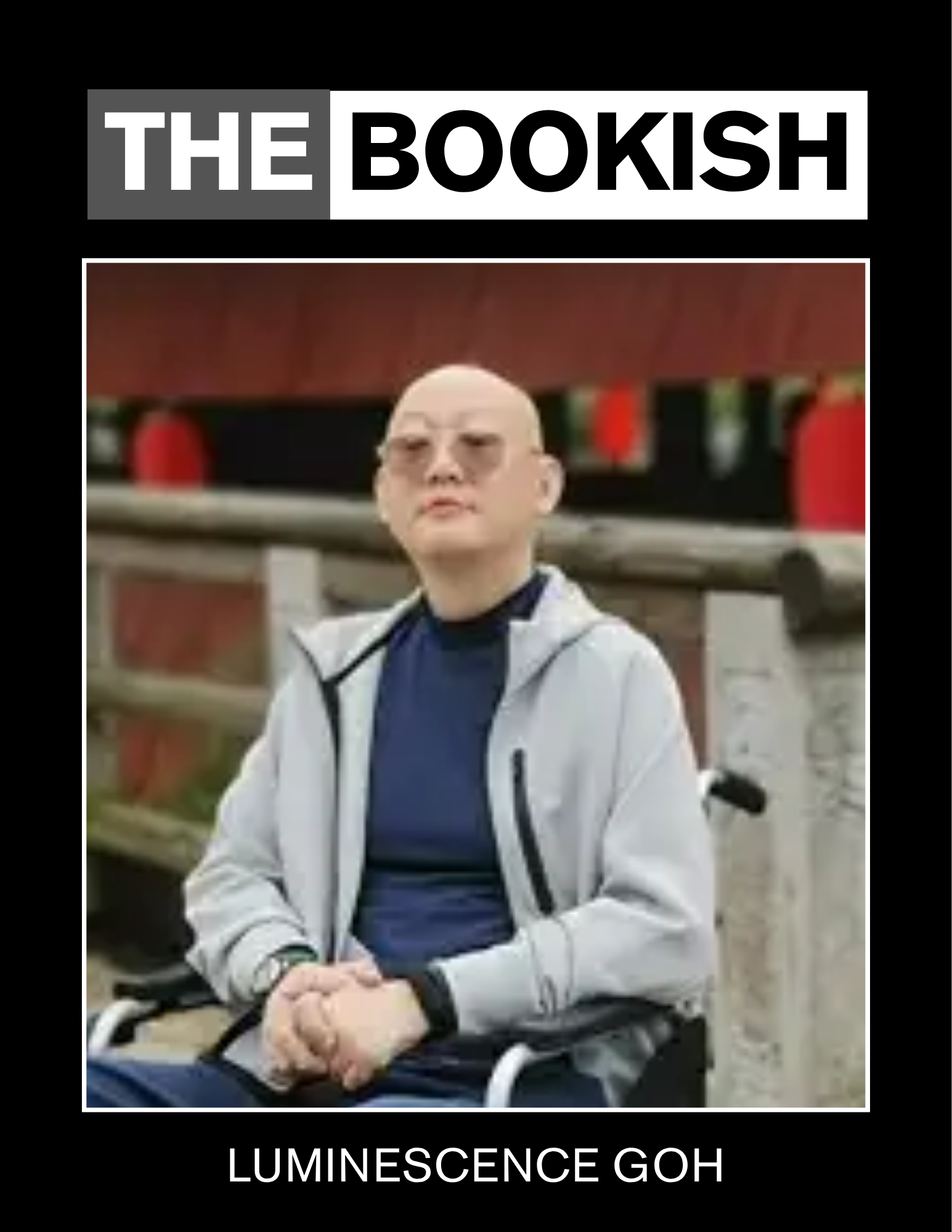
Author Luminescence Goh writes across both fiction and nonfiction, with recent work exploring the intersections of philosophy, psychology, ethics, and personal development. In Becoming Through Life’s Trials, the latest volume in the Navigating Life’s Challenges series, Goh examines how values, emotional resilience, and purposeful reflection can shape personal growth through life’s uncertainties. The author has received literary recognition for earlier works, and this conversation provides an opportunity to discuss that creative journey, the research behind the book, lessons learned through writing, and the ideas that continue to shape future projects.
Editor’s Note: This interview discusses topics related to psychology, philosophy, ethics, neuroscience, and personal development. The interviewee’s observations and interpretations reflect the author’s perspectives and are shared for general discussion rather than as professional psychological, medical, or therapeutic advice.
Luminescence, thank you for joining us. To begin, could you introduce yourself to our readers, share a little about your background, what you do, and what you hope to accomplish through your work?
Being here is an honour. I am Luminescence Goh, and I am a content creator, storyteller, blogger, songwriter, and author from Singapore.
I believe that stories have the power to make people think critically, develop as individuals, and perceive the world in new ways. While an insatiable need for storytelling set me on my creative path, it was the trials and tribulations of real life that moulded my writing style.
I have been steadily broadening my literary horizons ever since the publication of my debut Chinese fantasy novel in 2012, with the release of novels in English, instructional books, music, blogs, and digital storytelling.
Making material that connects enjoyment with personal growth is my main focus right now. My objective is to inspire wonder, perseverance, and originality in all that I do, whether it’s creating fantastical tales, making music, making movies, or sharing educational ideas.
In my opinion, every narrative has the potential to shed light on optimism, fortify moral fibre, and motivate constructive action. Connecting with readers across generations and cultures is something that keeps me going.
It gives me immense joy to witness someone’s journey toward bravery, solace, or a fresh outlook as a result of my work. For me, being creative is about more than just making a living; it’s about fulfilling a lifelong commitment to turning ideas into experiences that others will remember and cherish, and about showing them that the power of a single idea can light a path to greatness.
What inspired you to write Becoming Through Life’s Trials, and what questions did you hope to explore through the book?
The idea for Becoming Through Life’s Trials originated from an observation I made: the biggest problems in life defy categorisation.
Feelings, thoughts, decisions, and actions are all impacted by adversity. Meaning, purpose, and value are all topics that can be explored through philosophical inquiry. How our mental processes impact our ability to bounce back and develop as individuals is a central theme in psychological research. Ethics serves as a reminder that how we handle life’s challenges influences not just our own character but also the well-being of individuals close to us, while neuroscience sheds light on the brain’s ability to adapt, learn, and recover from hardship.
When taken as a whole, these points of view illuminate the meaning of overcoming adversity with greater clarity.
I wanted to know, on a personal and practical level, how people become resilient in the face of adversity rather than merely surviving it. When things get tough, how can we keep moving forward? To what extent does our capacity to triumph over adversity depend on our interpersonal connections, core beliefs, leadership, and dialogue?
By weaving together academic findings with personal anecdotes, I hoped to persuade readers to view setbacks not as failures but as chances for personal development, to forge deeper bonds with others around them, and to create lives based on acceptance, purpose, resilience, and progress rather than perfection or fear.
How did researching and writing Becoming Through Life’s Trials influence your own understanding of purpose and resilience?
My sense of purpose and fundamental principles evolved into something more tangible and personal throughout the course of researching and writing Becoming Through Life’s Trials.
When I was younger, I thought about purpose primarily in terms of a final goal, something we find and work toward. This work helped me realise that the choices we make on a daily basis—how we react to challenges, how we treat people, the boundaries we set, the lessons we learn from our mistakes, and the connections we maintain through times of transition—also reveal our purpose.
Then my fundamental principles emerged. Consistent practice is required for qualities like resilience, empathy, justice, inclusiveness, continual learning, and real connection, not only admiration.
Writing this book further solidified my conviction that active resilience is distinct from passive endurance. If we want to be truly resilient, we need to reflect, actively cope, seek assistance, change our attitude, and keep growing without giving up on our identity or our hope.
One thing I learned while writing the book is that people’s sense of purpose evolves as they go through life. Questions of identity and purpose may predominate in early adulthood, reevaluation in midlife, and mentoring, legacy, and impact in old age.
In the end, I realised that purpose isn’t about never failing or never succeeding. It means making decisions based on our principles and learning from our experiences, including the difficult ones, so that we may grow into better, more responsible individuals.
How did you balance research and theory with practical guidance that readers can apply in everyday life?
My strategy was to make sure that every theoretical idea had an application to real-world problems that people encounter.
My goal in writing this book was to avoid making it sound like a theory-heavy textbook or an opinion-heavy self-help manual. Rather, I grounded my work in modern psychological research, organisational theory, and philosophical principles, then applied those ideas to real-life contexts involving leadership, friendships, families, and communities.
The objective was to help readers make connections between theoretical concepts and real-world examples, allowing them to better grasp and make use of these ideas.
Rather than treating topics like motivation, fairness, communication, and resilience as theoretical constructs, I supplemented them with real-world examples and practical frameworks.
Readers may observe the practical application of concepts like empathy, inclusiveness, active listening, and purposeful leadership in real-life situations by examining examples of conflict in the workplace, family obligations, intercultural communication, and community partnerships.
In the end, my goal was for readers to come away from each chapter with a better grasp of why people act and think the way they do, as well as actionable strategies to improve their own resilience, relationships, and sense of purpose in life.
I wish for the book to be more than just a collection of facts; I want it to be a companion that encourages readers to think deeply, develop personally, and take purposeful action throughout their lives.
Why do you believe reflection plays such an important role in personal growth?
Since careful reflection turns experience into wisdom, I think it’s one of the most significant drivers of personal development.
Challenges by themselves don’t always transform us; what does is our readiness to take a step back, consider our responses, and ask honest questions like, “What have I learned?” “What principles influenced my choices?” and “How can I react differently the next time?”
By reflecting on our situations, we can start to grow instead of just responding to them.
I discovered that reflection links a variety of academic fields while conducting research and writing Becoming Through Life’s Trials. According to psychology, self-awareness enables us to identify patterns in our thoughts and actions. Philosophy challenges us to consider our values and purpose. Organisational behaviour serves as a reminder that our actions have an impact not only on ourselves but also on our families, communities, and workplaces.
When taken as a whole, these viewpoints support the notion that understanding our inner lives and interpersonal relationships is essential to real growth.
I also realised that introspection ought to inspire action. It is not about continuously analysing the past or dwelling on regrets. Rather, it is about learning lessons, improving decisions, building resilience, and leading a more purposeful life.
Every obstacle, achievement, or unforeseen change presents a chance to strengthen our character and ensure that our behaviour is consistent with our core beliefs.
In the end, I want readers to understand that personal development is determined by how thoughtfully they handle obstacles rather than by how few they encounter. With each experience, reflection transforms life’s challenges into opportunities to grow into more resilient, compassionate, and purposeful people.
How did you decide which research, frameworks, and disciplines to include in Becoming Through Life’s Trials?
Instead of beginning with specific ideas, I started my research by determining the main topics I wanted the book to address.
I posed questions like, “Why do people react differently to adversity?” “What makes people more resilient?” and “How might ethical decision-making, meaningful leadership, and improved relationships enhance daily life?”
After clarifying those topics, I read literature from the disciplines of philosophy, psychology, organisational behaviour, ethics, and related fields in search of concepts that were both empirically supported and relevant to contemporary issues.
I used three criteria to determine which frameworks to include.
First, each idea had to be backed up by reliable scholarly research.
Second, it had to be practical enough for readers to apply in their communities, workplaces, families, or personal lives.
Third, it had to support the book’s central themes of resilience, connection, inclusivity, leadership, and ongoing development rather than simply adding more theory.
Instead of presenting them as separate ideas, this method enabled me to incorporate subjects like motivation, communication, justice, emotional intelligence, and resilience into a logical framework.
Additionally, I deliberately tried to strike a balance between accessibility and depth. To help readers connect academic concepts with their own experiences, each chapter incorporates case studies, reflective questions, and real-world examples alongside scholarly research.
My intention was never to dazzle readers with technical jargon but rather to share trustworthy information in a way that promotes thoughtful reflection and meaningful action.
In addition to gaining a deeper understanding of the research, I hope readers will leave with practical frameworks that help them navigate life’s challenges with greater discernment, resilience, and purpose.
What have writing across both fiction and nonfiction taught you about communicating ideas?
I’ve learned from writing both fiction and nonfiction that, despite the differences in their objectives, all genres ultimately aim to help readers understand important ideas.
I can use characters, emotions, and fantastical worlds to explore difficult subjects in fiction. Stories, rather than explanations, help readers understand ideas like bravery, identity, responsibility, and resilience.
On the other hand, nonfiction allows me to explore those same concepts through analysis, practical frameworks, and evidence-based discussion.
Switching between genres has improved my communication as a writer. Fiction reminds me that facts are remembered when they connect emotionally with readers, while nonfiction reminds me that meaningful stories should also be grounded in careful thinking and practical usefulness.
I make an effort to incorporate the best aspects of both approaches into each project, using accessible examples, straightforward language, and engaging storytelling without sacrificing precision or nuance.
The way academic research is combined with real-world scenarios, case studies, and thought-provoking questions in Becoming Through Life’s Trials reflects this philosophy.
I wanted readers to understand how ideas like resilience, communication, leadership, inclusiveness, and purpose can be applied in their own families, communities, and workplaces rather than simply presenting theories in isolation.
In the end, my objective is the same whether I’m writing a nonfiction book or a fantasy novel: to encourage readers to reflect more deeply, discover fresh perspectives, and leave each book with ideas they can apply to their own lives.
What responses from readers have been especially meaningful to you?
Hearing from readers who say that a particular chapter or story caused them to pause and view their own circumstances from a different perspective has been one of the most fulfilling parts of sharing my work.
The gentler responses—someone choosing to have a challenging but honest conversation, reconsidering a long-held opinion, or facing a personal difficulty with more patience and resilience—often inspire me more than dramatic changes.
I have also valued discussions with readers from various cultural and professional backgrounds. Seeing how the concepts of purpose, resilience, communication, ethics, and lifelong learning apply in a variety of settings is satisfying.
While some readers are drawn to the psychological perspectives or the real-world case studies, others relate to the philosophical reflections.
These diverse responses serve as a reminder that there isn’t a single route to personal development and that people frequently derive meaning from a variety of experiences and perspectives.
As a writer, I don’t expect readers to share every viewpoint. Rather, I hope the book promotes introspection and meaningful conversation.
The discussions that stay with me are those in which readers say the book made them think more deeply about their leadership, relationships, beliefs, and purpose.
That, in my opinion, is one of the greatest rewards of writing—not just sharing knowledge, but also creating opportunities for meaningful reflection and conversations that continue long after the final page has been turned.
Looking back on your writing journey, what milestones or accomplishments stand out to you, and what have they taught you?
When I reflect on my writing journey, I consider milestones more as reminders to keep improving than as personal accomplishments.
Seeing my works published after years of study, writing, editing, and persistence was one of the most significant experiences. Every finished manuscript is the result of many hours spent studying, refining concepts, and believing in a purpose even when progress seemed slow.
Having my work recognised internationally is another accomplishment that I greatly value. It was a humbling pleasure to have two of my novels named finalists in the 2026 Next Generation Indie Book Awards.
Even though I never write for recognition, it was reassuring to know that the stories and ideas I had spent so much time developing resonated with publishing industry professionals.
It served as a reminder that perseverance, continual learning, and commitment can lead to opportunities that once seemed unattainable.
The opportunity to write in a variety of genres has been equally significant, ranging from nonfiction that draws on philosophy, psychology, organisational behaviour, and ethics to help readers navigate everyday life, to fantasy fiction that explores creativity, bravery, and moral decisions.
Although these books differ greatly in style, they all aim to inspire readers to think critically, grow, and face life’s challenges with greater resilience and empathy.
Becoming Through Life’s Trials, which builds upon previous research while encouraging real-world reflection and lifelong learning, also reflects this philosophy.
In the end, the opportunities to keep learning, creating, and engaging with readers mean more to me than the awards themselves.
Every book, every discussion, and every comment from a reader reminds me that writing is about more than creating pages; it’s about making a meaningful contribution that may inspire others to think differently, face challenges with courage, and discover new possibilities in their own lives.
What do you hope readers take away from Becoming Through Life’s Trials?
Instead of looking for quick fixes or a step-by-step formula for success, I hope readers approach Becoming Through Life’s Trials with an open mind and a willingness to reflect.
The purpose of the book is not to tell readers what they should think. Rather, it encourages them to pause, reflect on how their experiences, beliefs, and decisions shape the lives they are creating, and ask thoughtful questions.
I also encourage readers to read the book slowly.
Each chapter explores philosophy, psychology, organisational behaviour, ethics, and everyday life, and many of the ideas are intended to be contemplated rather than simply read.
While some readers may connect with the research, others may find that the case studies, real-world examples, or reflective questions resonate more deeply.
Every reader brings different life experiences and perspectives to the book, so there is no single “right” way to experience it.
Above all, I hope readers leave the book feeling more curious, resilient, and hopeful.
Life’s challenges cannot always be avoided, but if we are willing to learn from them, they can become opportunities for personal growth.
I think the book has achieved its purpose if readers finish the final chapter feeling inspired to think more purposefully, build stronger relationships, align their actions with their core beliefs, and embrace lifelong learning.
In the end, I want Becoming Through Life’s Trials to become a companion that readers can revisit at different stages of their lives, gaining fresh insights as they continue their own journeys of personal growth.
If you were to write your own bio, what would you say? And as your work evolves, what kind of impact do you hope it has?
I would simply say that I am a lifelong student who discovered my voice through writing.
Stories and knowledge, in my opinion, have the capacity to stimulate reflection, foster cross-cultural connections, and encourage constructive change.
My objective is always the same, whether I’m writing nonfiction that draws from philosophy, psychology, organisational behaviour, and ethics or fantasy fiction that explores bravery, responsibility, and hope.
I’ve learned through my writing journey that every obstacle presents an opportunity to grow and that genuine progress requires curiosity, perseverance, and a willingness to learn.
These principles influence not only my writing but also my work as a content creator, blogger, and songwriter.
I strive to communicate complex ideas in ways that are understandable, practical, and applicable to everyday life while encouraging readers to think critically with empathy and an open mind.
I hope my work has an impact that extends beyond the pages of any single book as it evolves.
I hope my research and stories inspire readers to face life’s challenges with perseverance, integrity, and purpose while fostering meaningful conversations and lifelong learning.
I will feel that I have achieved my goal as a writer if my writing gives someone hope during a difficult time, helps them see things from a different perspective, improves a relationship, or brings them one step closer to personal growth.
Ultimately, I hope to leave behind not only books but also a legacy of inspiring people to think critically, act wisely, and make constructive contributions to their communities and future generations.
Share Your Insights
Feel free to share your answers in the comments below:
- What part of this post resonated with you the most, and why?
- How does this post connect with your own journey?
- Do you have any other bookish insights you’d like to share?
Disclaimer
The content in The Bookish Magazine is for general informational and literary purposes only and does not constitute professional advice. Opinions expressed are those of the authors and do not necessarily reflect the views of the publication. For full details, please read our complete disclaimer, terms, and policies on our website.
Helpful Shortcuts
- About
- Books and Blogs
- Contact Us
- Disclaimer, Privacy Policy, and Terms of Service
- Editorial Guidelines
- Magazine
- Submissions
- The Bookish Awards
- Voluntary Contribution Policy


