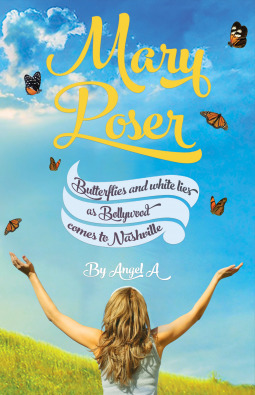
- Genre: Young Adult | Romance | Contemporary Fiction
- Goodreads link: https://www.goodreads.com/book/show/216839576-mary-poser-young-adult-edition
Some books whisper their message, while others sing it with the force of a Nashville ballad. Mary Poser (YA Edition) does both, layering its melody with the tension of forbidden love, the burden of societal expectations, and the universal ache of self-discovery. It’s easy to read this novel as a romance, a simple love story between a Southern Baptist girl and a Hindu filmmaker. But what happens when you strip away the romance and look at what’s really being said?
At its core, this is a story about control—who has it, who loses it, and who dares to take it back. Mary Poser is the quintessential “good girl,” raised in a world where compliance is currency. Her life has been dictated by church, family, and a community that expects her to color within the lines. But real life, much like love, is messy. Studies show that 36% of young adults experience anxiety, often stemming from external pressures. Mary is no exception. Her panic attacks are not just plot points; they are reflections of a mind at war with itself.
The setting is a character of its own. Nashville, the beating heart of country music, is the perfect backdrop for a girl caught between two worlds. Bollywood, known for its sweeping romance and grandeur, is more than just a contrast—it’s a metaphor. If country music is about honesty, then Bollywood is about dreams, and Mary is stuck between the two, unsure which one she belongs to. It’s a clever use of setting that speaks volumes about identity.
Romantic tension in fiction is often used as a vehicle for wish fulfillment, but here, it’s something else entirely. Simha Das is not just a love interest; he is a catalyst. His presence in Mary’s life is a mirror, reflecting everything she has been taught to reject. If love is supposed to be simple, why does it feel like treason? The novel forces readers to question their own biases—whether cultural, religious, or personal. If Mary had fallen for a local boy, would her family’s reaction have been different? If Simha had been Christian, would their love story have been less complicated?
Few novels tackle religious and cultural identity with such nuance. We often see these themes in stories of immigrants, but what about the people who stay? What happens when you’re born into a world that no longer fits you? There’s a reason butterflies are a recurring motif in the novel—Mary is in the process of breaking out of her cocoon, but the struggle is real. Change is never easy, and this book does not pretend otherwise.
One of the most striking aspects of the novel is how it deals with prejudice—not in dramatic, violent ways, but in the small, everyday moments that sting the hardest. A stranger’s offhanded racial remark. A parent’s disapproving silence. A community’s quiet rejection. These are the moments that shape people, and Mary Poser captures them with uncomfortable accuracy. The story doesn’t just ask if love can conquer all; it asks whether we’re willing to let it.
Perhaps the most unconventional yet profound takeaway from Mary Poser is its perspective on happiness. We are often sold the idea that love equals fulfillment, but Mary’s journey suggests something deeper. Love, when tied to obligation, can suffocate just as easily as it can set someone free. The real question is not whether Mary and Simha end up together—it’s whether Mary finds the courage to claim her own life.
This book will frustrate those who want a straightforward romance with neatly tied bows. But for readers who appreciate fiction that pushes boundaries, challenges traditions, and leaves room for reflection, Mary Poser is a rare find. The writing is fluid, the emotions raw, and the message clear: sometimes, the bravest thing you can do is refuse to be who the world expects you to be.
Content Warning: This novel deals with themes of anxiety, cultural and religious tension, identity struggles, and racism. While presented thoughtfully, younger readers may need guidance in processing some of the themes.
Share Your Insights
Feel free to share your answers in the comments below:
- What part of this post resonated with you the most, and why?
- How does this post connect with your own journey?
- Do you have any other bookish insights you’d like to share?
Disclaimer
The content in The Bookish Magazine is for general informational and literary purposes only and does not constitute professional advice. Opinions expressed are those of the authors and do not necessarily reflect the views of the publication. For full details, please read our complete disclaimer, terms, and policies on our website.
Helpful Shortcuts
- About
- Books and Blogs
- Contact Us
- Disclaimer, Privacy Policy, and Terms of Service
- Editorial Guidelines
- Magazine
- Submissions
- The Bookish Awards
- Voluntary Contribution Policy


