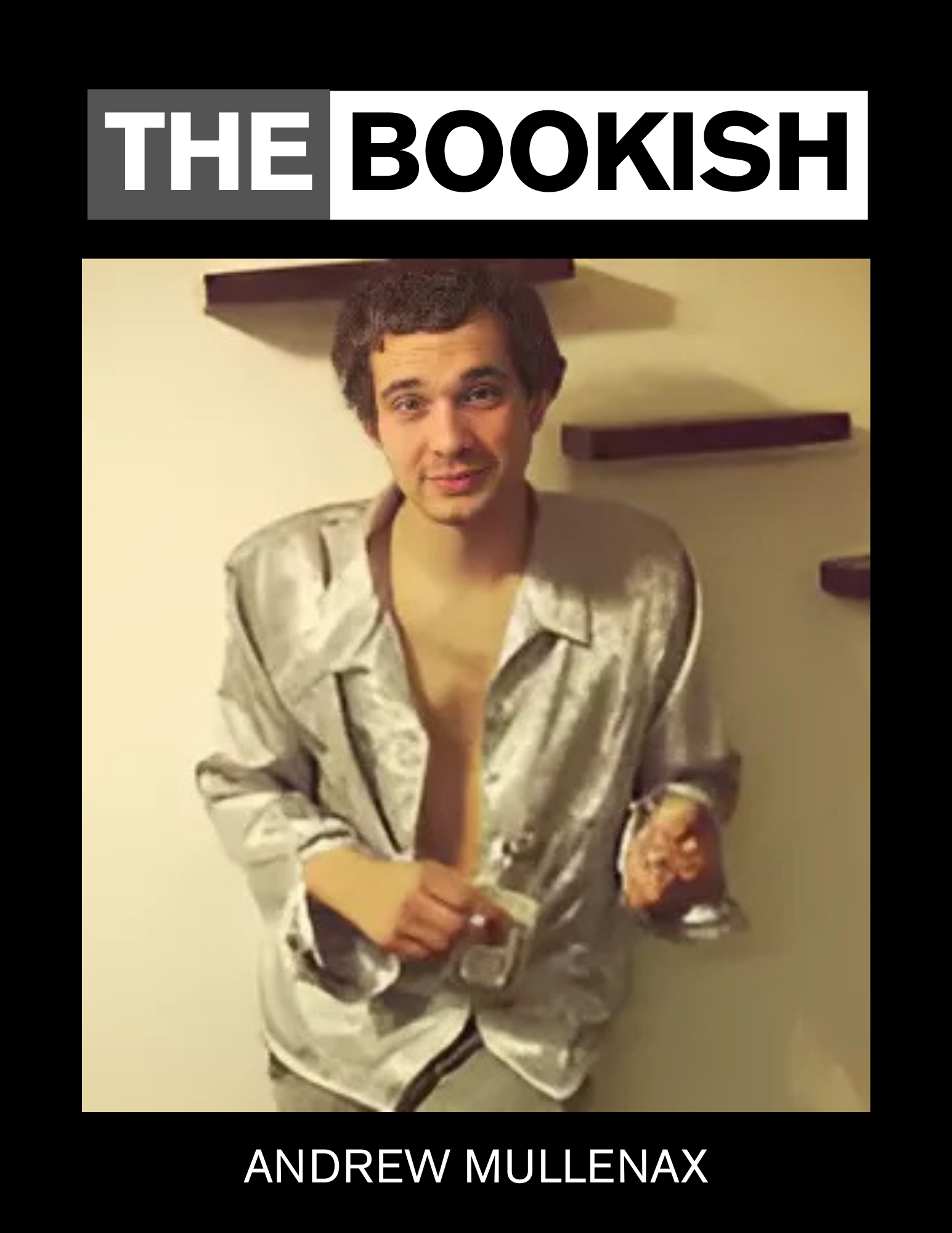
Andrew Mullenax turns to writing to reach something essential each day, a process that both sustains him and shapes his creative journey. In this interview, he shares how poetry became indispensable, drawing on experience, emotion, and spiritual urgency. Read on to discover the drive behind The Destroyer.
Editor’s Note: This interview contains references to depression, dark emotional themes, and spiritual concepts that may not be suitable for all readers.
Andrew, thank you for making time for this conversation. Can you begin by introducing yourself to our readers—what do you do, what brought you into writing, and what motivates you to keep going?
I am the author of the poetry book The Destroyer. I studied History and Philosophy at Eastern Michigan University. I started seriously writing at the age of 16. It was more of a compulsion that took over me, that I couldn’t resist. I pretty much write in any genre. A sadness overcomes me if I stop writing, so that motivates me to keep writing. Maybe I am trying to communicate deep spiritual truths or just get through the day. I originally went to school to be a teacher, but I quit because I wanted to write instead. Writing soon took over my life.
Many of your poems read like moments that chose not to be forgotten. When you write, are you revisiting the past, recording the present, or trying to reshape both?
It’s a combination of things. I feel like I am simultaneously expressing current emotion and conjuring up past demons. Some of it is archetypal relating to past memories, while other times it is more fresh and in the current moment.
Your work doesn’t shy away from intensity—emotionally, rhythmically, or thematically. What guides your decisions about what to share on the page, and what to leave unsaid?
Well, it’s a big book—I didn’t leave much unsaid. I try not to bore the audience, but really when I am writing I am not self-aware of others’ perspectives. It isn’t curated for an observer but flows out of some dark necessity to be expressed. It’s a shame that the darker themes may limit the possible audience, but I think all humans wrestle with these feelings and themes to some degree. I believe the book is universal in its own special way, so if a reader connects to it, that’s even better, because I am being open and authentic. So yeah, I am not for censored writing because you never know what may come out if you open yourself up to it.
Some writers use their work as a way to process; others see it more as performance or reflection. What role does writing play in your own life?
This particular book was about processing past events coupled with a present, all-pervasive depression. I’ve done a little performance art in other works but not in this one. I had to sacrifice the styling of “beautiful” language to get down to a guttural level. Perhaps all of art is just symbols, but I hope my words touch people in a way that is new. In a way, it is a form of consciousness expansion or spiritual growth that I was seeking, so I didn’t have time to put on the veneer of false artistry.
You write in a voice that feels both very personal and very deliberate. How has your style evolved, and who or what has influenced the way you write now?
I was trying to do an evolution of the Beat Generation poets mixed with pop poetry. I had read the original manuscript of On the Road and thought it was way better than the edited version. The edited version took years to write, but the original manuscript was written in three weeks or something like that. A lot of people think Jack Kerouac wrote bad poetry, but I was more looking into his jazz-styled prose and the innate poetry in them. My theory is that poetry is a matter of perspective, and I would like to be at the forefront of popular poetry by making it more accessible to the masses. So I stripped down the language to a certain degree and turned up the emotion, and found my own unique perspective on the matter. There are a lot of writers that influenced my writing. But you know, a lot of poetry I read I don’t enjoy because the author is trying too hard. Nature is the poetry of reality, and we invented these words to try and symbolize its beauty and darkness. In the Dada sense, where the artist is just the pointer, I just let my creations create themselves. I think as an artist it is generally a negative thing to have influences because everyone is looking for a unique voice or something new. But you have to learn somewhere.
In publishing poetry that draws from personal emotion, what have you learned about the connection between artist and audience?
I’ve been getting positive reviews, which feels good. A little pushback from the more snobbish elements in the poetry community, but I think this work will find its place. I hold the capacity to create poetry out of nothing in high regard, so if my words aren’t producing the emotional resonance in another’s subjective reality there isn’t much I can do. A lot of writing is style over substance, which I personally enjoy—style over substance. But the general audience doesn’t. There are various writing tools you can implement, but I tried to destroy any barrier between me and the reader. I hope people take my writing personally. In a way, my writing is more meaningful to the reader than it is to me, or at least it can be. I feel like I did my job of being authentic, so it is up to the audience to decide if they love or hate my work—it’s all out of my hands now.
What practices or habits help you sustain creativity and emotional clarity while working with difficult themes?
I drink a lot of tea and stay up late. Honestly, to be a good writer you have to completely change your perspective on life and be “on” all the time. There are no vacations. Life experience helps, but fertile imagination can go a long way. I am always thinking about writing—90 percent of writing isn’t writing but being open to new ideas and experiences, then transmuting them into art. I’m not sure if creativity can be taught, but it can be harnessed for short bursts of time. You always have to be open to the divine inspiration.
In a world full of curated experiences and polished narratives, what does authenticity in writing mean to you?
First you need to live an authentic life. Authenticity isn’t just lacking in the arts but in humanity in general. That is why it is so refreshing under the rare circumstance that we come across it. Humility is having an accurate portrait of your flaws and strengths—not too down on yourself and not too high. In a way, authenticity is mysterious because you are being true to your inner drives. Only you can gauge how true your truths are. It is better to be authentic than to conform, if you are willing to accept the consequences.
How do you handle feedback—especially when your work is vulnerable, unconventional, or challenges reader expectations?
I enjoy reading bad and good reviews. You know, I feel like I created what I set out to create, so I’m not terribly moved by good reviews or bad reviews. I like it when people say they love my work because it makes me feel less alone.
Have you received any recognition, awards, or acknowledgments for your work that stand out in your journey? What did those moments mean to you personally or professionally?
So far I have received an Editor’s Pick in a literary magazine. I didn’t write the collection for recognition but as a process of spiritual growth. It has prepared me to write my next project. Although it’s nice to get positive feedback because it means they get it.
If you were to write your bio in your own words, what would you say? What legacy would you like to leave?
It’s not possible, but I would like to be known as one of the greatest artists. As everyone knows, art has the capacity to change the world. Anyone can be an artist or relate to art. I am more concerned with living out the rest of my life than creating a legacy. The legacy is more for the fans to create. If people can keep my art alive long after my death, that would be great.

The Destroyer by Andy Mullenax
If your thoughts could leave bruises, would your poems still be beautiful? This review explores a collection where every verse walks the line between wound and witness. Read on to find out.
Share Your Insights
Feel free to share your answers in the comments below:
- What part of this post resonated with you the most, and why?
- How does this post connect with your own journey?
- Do you have any other bookish insights you’d like to share?
Disclaimer
The content in The Bookish Magazine is for general informational and literary purposes only and does not constitute professional advice. Opinions expressed are those of the authors and do not necessarily reflect the views of the publication. For full details, please read our complete disclaimer, terms, and policies on our website.
Helpful Shortcuts
- About
- Books and Blogs
- Contact Us
- Disclaimer, Privacy Policy, and Terms of Service
- Editorial Guidelines
- Magazine
- Submissions
- The Bookish Awards
- Voluntary Contribution Policy


