Genre: Memoir
Sub-genres: Survival narrative, psychological reflection, social commentary
Themes: Resilience, family trauma, systemic failure, memory, hope
Review
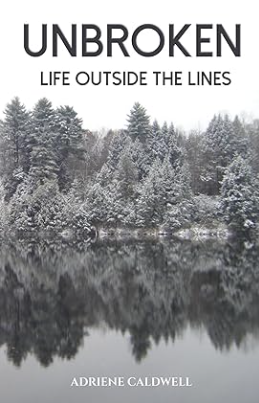
Most people imagine survival as a matter of physical endurance—food, water, shelter. Science backs this up: the human body can last about three weeks without food, three days without water, and three minutes without air. But what about the survival of the psyche? How long can a child endure neglect, chaos, and the constant pressure of instability before something inside fractures? Adriene Caldwell’s Unbroken: Life Outside the Lines confronts this question with brutal honesty, though never with gratuitous detail.
At its heart, the book is less about recounting events than it is about reconstructing memory into meaning. Readers first meet Caldwell as a young narrator who quickly learns that the world is neither fair nor gentle, but also that the instinct to adapt is almost biological. As the memoir unfolds through her childhood, adolescence, and into her twenties, the perspective matures, revealing how survival and reflection evolve together. Psychologists call this “post-traumatic growth”—the idea that certain individuals emerge from hardship not untouched but uniquely capable of empathy and insight. Caldwell’s narrative embodies this principle, showing how a life can be both marked by damage and shaped by resilience.
The memoir moves in fragments that feel like snapshots, much the way memory often does. A gesture at the dinner table, a whispered warning in a hallway, a birthday cake too beautiful to cut—these moments carry more weight than elaborate explanations ever could. Anthropologists note that families function as “micro-societies,” each with its own rules, rituals, and silences. Caldwell’s family is no exception, but the rules are distorted by instability, secrecy, and fear. What emerges is a portrait of loyalty and betrayal, tenderness and cruelty, coexisting under one roof.
The writing is raw yet polished enough to convey control over chaos. There is rhythm in the prose, almost like waves hitting shorelines, which suits a story shaped by cycles of loss and renewal. The book does not dwell on victimhood; instead, it lingers on the strange paradoxes of survival. For instance, how a child can feel safest during the most precarious moments, or how humor slips into the bleakest circumstances like an uninvited guest. The effect is unsettling, but also deeply human.
One of the most striking aspects is the narrator’s use of instinct. Neuroscience tells us the amygdala—the brain’s alarm system—can react before conscious thought forms. Caldwell illustrates this not through jargon, but through lived moments where instinct guides choices that alter the course of her life. Readers will find themselves reflecting on their own instincts, wondering whether they too would recognize danger in time or miss its warning altogether.
Who is this book for? It is for readers who believe memoirs are not just about one person’s story but about patterns that repeat across many lives—cycles of hardship, but also the stubborn persistence of hope. It is not for those looking for escapism or tidy resolutions; the story resists neatness because life rarely provides it.
The greatest takeaway is that survival is not a finish line but a continuous act. The book ends not with answers but with the assurance that even fractured beginnings can lead to whole lives. Caldwell does not promise comfort, but she offers something rarer: the reassurance that being shaped by struggle does not mean being defined by it.
Content Warning: This memoir contains depictions of abuse, neglect, and mental illness that may be difficult for some readers.
The Bookish Reader’s Pick

This book has been honoured with The Bookish Reader’s Pick title, a prestigious category of The Bookish Awards. This recognition celebrates books that have deeply resonated with readers, capturing their hearts and minds through compelling storytelling, memorable characters, and meaningful themes. Chosen by passionate book lovers, this award highlights the power of literature to inspire, entertain, and leave a lasting impact.
Share Your Insights
Feel free to share your answers in the comments below:
- What part of this post resonated with you the most, and why?
- How does this post connect with your own journey?
- Do you have any other bookish insights you’d like to share?
Disclaimer
The content in The Bookish Magazine is for general informational and literary purposes only and does not constitute professional advice. Opinions expressed are those of the authors and do not necessarily reflect the views of the publication. For full details, please read our complete disclaimer, terms, and policies on our website.
Helpful Shortcuts
- About
- Books and Blogs
- Contact Us
- Disclaimer, Privacy Policy, and Terms of Service
- Editorial Guidelines
- Magazine
- Submissions
- The Bookish Awards
- Voluntary Contribution Policy


