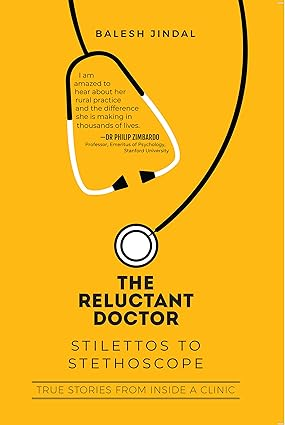
Genre: Memoir
Sub-genres: Medical narrative, socio-cultural reflection, autobiographical journey
Themes: Compassion, resilience, gender roles, community health, rural transformation, the intersection of tradition and modernity
Review:
There are books that entertain, some that instruct, and then there are those that simply place you in someone else’s shoes so thoroughly that you forget your own. The Reluctant Doctor belongs to the third kind. Imagine stepping into a small guardroom on the edge of Delhi’s farmland, armed with little more than a medical degree, hesitant hands, and a father’s gentle push. That is where Dr. Balesh Jindal begins—not in a grand hospital, but in a space where patients believe more in touch than in tablets.
Reading her memoir feels like walking through four decades of India’s transformation while sitting on a wooden bench in her waiting room. We meet villagers who arrive before sunrise, mothers who mistake illness for curses, and young boys learning dangerous lessons from alleyways rather than classrooms. If this sounds heavy, it often is—but the writing never forgets the flicker of humor or the quiet awe of mustard flowers waving in the wind. Isn’t it curious how the mind can hold grief and gratitude in the same breath? Science calls this cognitive flexibility; Dr. Jindal’s life calls it necessity.
The significance of this book lies not only in its cases but in the questions it asks about empathy. Neuroscience tells us that the brain’s mirror neurons fire when we see someone else in pain. But what happens when a doctor spends forty years watching suffering? Does empathy dull like a used scalpel, or sharpen into something luminous? Dr. Jindal doesn’t preach the answer; she shows it through small, precise stories—women seeking dignity in silence, men navigating newfound wealth, children teaching lessons without ever intending to.
This is not a manual for aspiring doctors, nor is it a sugarcoated escape. It is instead for readers curious about the quiet revolutions that take place when one person chooses to stay in a place where leaving would have been easier. If you prefer fast-paced thrillers or stories resolved neatly with bows, you may not find what you’re looking for here. But if you’ve ever asked yourself how compassion is measured—or whether it even should be—this memoir has a way of staying with you long after the last page.
Content Warning: The book includes accounts of rural hardships, medical emergencies, gender-based struggles, and community traumas. These are handled with care but may be intense for sensitive readers.
The Bookish Reader’s Pick

This book has been honoured with The Bookish Reader’s Pick title, a prestigious category of The Bookish Awards. This recognition celebrates books that have deeply resonated with readers, capturing their hearts and minds through compelling storytelling, memorable characters, and meaningful themes. Chosen by passionate book lovers, this award highlights the power of literature to inspire, entertain, and leave a lasting impact.
Share Your Insights
Feel free to share your answers in the comments below:
- What part of this post resonated with you the most, and why?
- How does this post connect with your own journey?
- Do you have any other bookish insights you’d like to share?
Disclaimer
The content in The Bookish Magazine is for general informational and literary purposes only and does not constitute professional advice. Opinions expressed are those of the authors and do not necessarily reflect the views of the publication. For full details, please read our complete disclaimer, terms, and policies on our website.
Helpful Shortcuts
- About
- Books and Blogs
- Contact Us
- Disclaimer, Privacy Policy, and Terms of Service
- Editorial Guidelines
- Magazine
- Submissions
- The Bookish Awards
- Voluntary Contribution Policy


