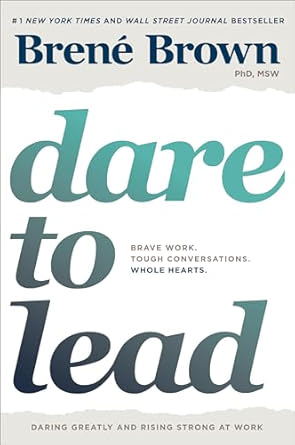
What if the key to effective leadership isn’t charisma, authority, or bulletproof confidence—but the willingness to admit, “I don’t have all the answers”? Dare to Lead by Brené Brown doesn’t offer the usual playbook of management strategies. Instead, it invites a redefinition of leadership itself—less about control, more about courage.
At its core, the book argues something both radical and strangely intuitive: vulnerability is not weakness; it’s the birthplace of trust, innovation, and real connection. Brown, a research professor known for her groundbreaking work on shame and vulnerability, backs this up not with sentiment but with data. Drawing from years of interviews, workplace studies, and behavioral research, she pieces together a compelling framework for how modern leaders can build cultures where people show up with both their skills and their humanity.
The book doesn’t just preach these ideas—it practices them. Brown shares her own leadership missteps, moments of self-doubt, and the internal scripts many professionals are afraid to admit they hear. You’ll read sentences that sound like inner dialogue: “What if I fail?” “What will they think?” These moments don’t make the message weaker; they make it trustworthy. Because if a social scientist who’s spent decades studying vulnerability still has to work at it, then maybe we all can.
Rather than aiming for perfection, Dare to Lead leans into what Brown calls “rumbling with vulnerability”—having honest, often uncomfortable conversations that prioritize truth over ease. And it works. Research from organizations like Google’s Project Aristotle shows that psychological safety—a culture where people feel safe to take risks and admit mistakes—is a top predictor of team performance. Brown’s approach aligns directly with that science, but she translates it into a human voice, not corporate jargon.
The book introduces actionable tools, like the “Clear is Kind” principle (unclear feedback is often just avoiding discomfort), the idea of armored vs. daring leadership (think: defensive posturing vs. open-hearted accountability), and the importance of aligning values with behavior. These aren’t abstract ideas—they’re daily tests of integrity.
But what makes Dare to Lead so resonant is that it doesn’t stop at the workplace. Its lessons bleed into parenting, friendships, community life. If leadership is defined as “anyone who takes responsibility for recognizing the potential in people and processes,” as Brown asserts, then this book isn’t just for executives. It’s for teachers, coaches, team leads, parents—anyone brave enough to lead with both strength and softness.
Brown writes with clarity, humor, and compassion. She quotes research, sure—but also favorite songs, conversations with her kids, and lessons from hard-earned experience. She invites us to replace fear with curiosity, silence with honest dialogue, and performative strength with grounded self-awareness.
Dare to Lead isn’t about climbing a ladder faster. It’s about deciding what kind of person you want to be once you get there—and building a culture where others can rise with you. Not because you demanded it, but because you modeled it first.
Share Your Insights
Feel free to share your answers in the comments below:
- What part of this post resonated with you the most, and why?
- How does this post connect with your own journey?
- Do you have any other bookish insights you’d like to share?
Disclaimer
The content in The Bookish Magazine is for general informational and literary purposes only and does not constitute professional advice. Opinions expressed are those of the authors and do not necessarily reflect the views of the publication. For full details, please read our complete disclaimer, terms, and policies on our website.
Helpful Shortcuts
- About
- Books and Blogs
- Contact Us
- Disclaimer, Privacy Policy, and Terms of Service
- Editorial Guidelines
- Magazine
- Submissions
- The Bookish Awards
- Voluntary Contribution Policy


