Have you ever wondered if the same instincts that make people hoard toilet paper during a storm could unravel an entire government? This piece explores how fiction dares to answer.
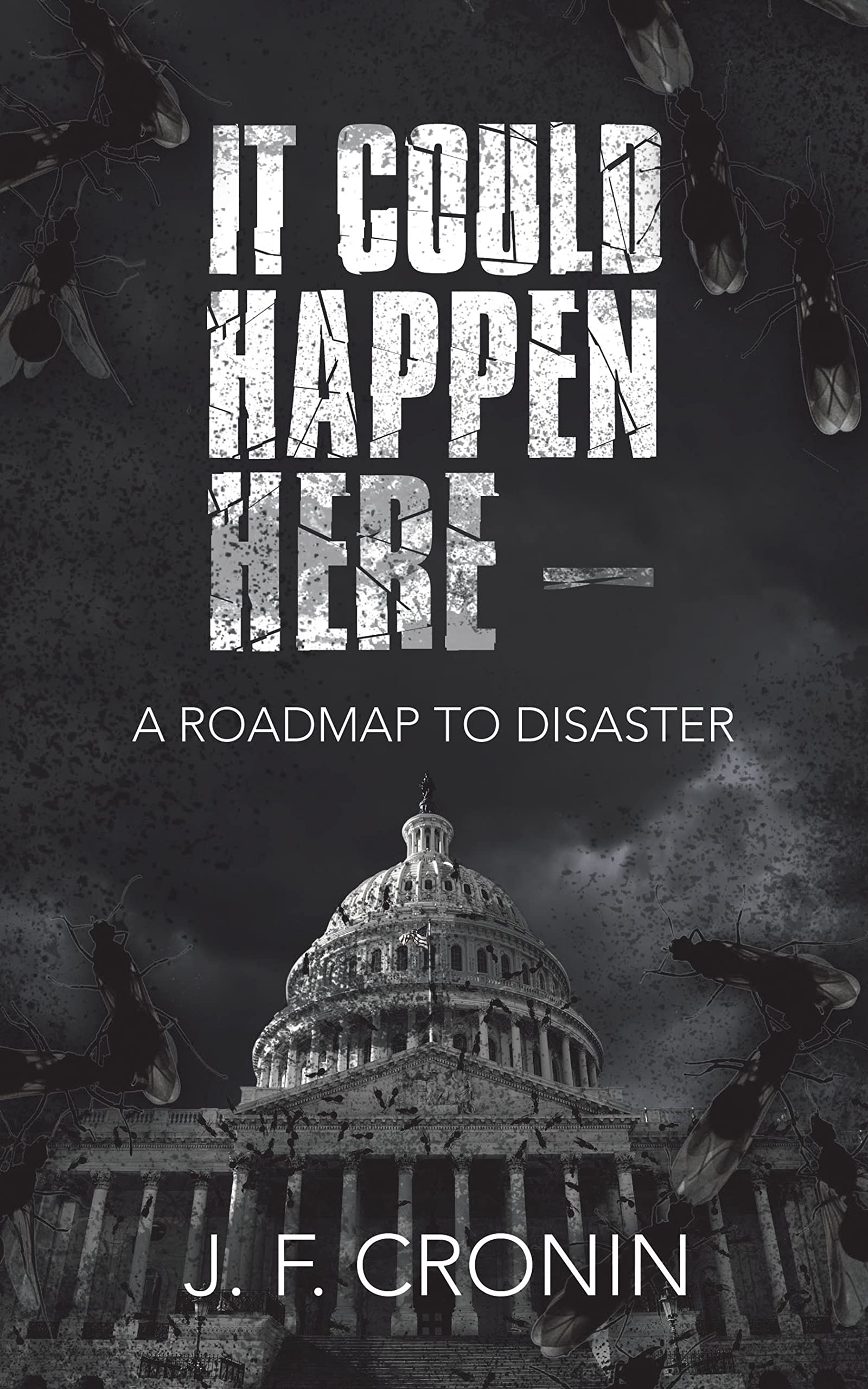
It Could Happen Here by J. F. Cronin
Genre: Political Thriller
Subgenres: Corporate intrigue, power drama, speculative near-future suspense
Themes: Ambition, fragility of systems, self-interest vs. duty, manipulation
Content Warning: Contains depictions of political corruption, militarized violence, and moral compromise
The curious thing about J. F. Cronin’s It Could Happen Here is that it doesn’t move like a thriller in the traditional sense. Instead of car chases or timed explosives, its fuse is lit through conversations, golf club lunches, and corporate boardroom maneuvering. The real explosions are psychological: egos clashing, loyalties dissolving, strategies forming in whispered tones. Reading it feels less like flipping through a novel and more like being accidentally copied on an email thread you were never supposed to see.
The center of this orbit is Eric King, a CEO whose wealth and cunning insulate him from ordinary accountability. He is the type of character who might make you uneasy because he is believable. We’ve all met someone—at work, at a community meeting, maybe even in family dynamics—who thrives on control without rules. Multiply that by billions of dollars, add access to government, and you get King.
But King is not the only current running under this story. There is Wolf Stryker, a man forged in the battlefield, who carries the type of silence that only comes from living with moral contradictions. He represents the opposite side of the coin: the human cost, the body that bears decisions signed away in conference rooms. His inclusion provides the reminder that abstractions like “power” and “security” eventually end up etched into someone’s life, someone’s conscience.
What stands out is how Cronin weaponizes the ordinary. A golf outing turns into a strategy session that reshapes elections. A corporate policy morphs into a plan for mobilizing militias. It is like watching a Jenga tower tip over—not because one brick was pulled with force, but because so many were nudged, little by little, until collapse was inevitable. The subtlety is what makes it chilling.
The novel also taps into a psychological truth: people cling to narratives that make them feel secure, even when the evidence points otherwise. Behavioral scientists call this cognitive dissonance. Cronin dramatizes this dissonance through leaders who deny looming crises or rationalize schemes because admitting their fragility would be unbearable. In that sense, the book is not only a story of individuals but also a study of systems—how nations, corporations, and even families bend under pressure.
Who will love this book? Readers who enjoy connecting fiction to reality, who take satisfaction in piecing together how small actions ripple into history, will find it rewarding. Who may not? Those craving escapism, easy victories, or characters painted in black and white may find its moral palette too gray.
At its core, It Could Happen Here is unsettling not because it invents monsters, but because it insists on showing us the monsters we already know: ambition, denial, and the seductive comfort of thinking “it can’t happen here.”
The Bookish Reader’s Pick

This book has been honoured with The Bookish Reader’s Pick title, a prestigious category of The Bookish Awards. This recognition celebrates books that have deeply resonated with readers, capturing their hearts and minds through compelling storytelling, memorable characters, and meaningful themes. Chosen by passionate book lovers, this award highlights the power of literature to inspire, entertain, and leave a lasting impact.
Share Your Insights
Feel free to share your answers in the comments below:
- What part of this post resonated with you the most, and why?
- How does this post connect with your own journey?
- Do you have any other bookish insights you’d like to share?
Disclaimer
The content in The Bookish Magazine is for general informational and literary purposes only and does not constitute professional advice. Opinions expressed are those of the authors and do not necessarily reflect the views of the publication. For full details, please read our complete disclaimer, terms, and policies on our website.
Helpful Shortcuts
- About
- Books and Blogs
- Contact Us
- Disclaimer, Privacy Policy, and Terms of Service
- Editorial Guidelines
- Magazine
- Submissions
- The Bookish Awards
- Voluntary Contribution Policy


