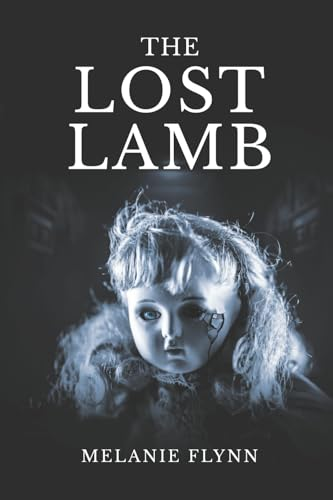
What happens when guilt becomes a compass instead of a wound? In The Lost Lamb, readers will uncover how one man’s lifelong regret reshapes the meaning of justice and redemption.
Book Title and Author
The Lost Lamb by Melanie Flynn
Genre, Subgenres, and Themes
Genre: Crime Thriller
Subgenres: Psychic Detective Fiction, Psychological Mystery, Police Procedural
Themes: Guilt, Redemption, Secrets, Loss, Truth, Partnership, Moral Responsibility
Review
Can an old mistake ever truly die, or does it linger in the quiet spaces between memory and justice? In The Lost Lamb, Melanie Flynn explores that haunting question through an investigation that blurs the line between reason and intuition.
The story follows NYPD Detective Calum Reese and psychic private investigator Rylee Scott, two people bound by secrets, intellect, and an uneasy trust. Months after capturing a notorious serial killer known as the Toy Maker, they find themselves drawn into a new case that cuts far deeper than either expected. Calum’s past resurfaces when his long-missing sister becomes the focus of their search, while a chilling new murder hints that the Toy Maker’s influence is not as buried as the city hopes.
What stands out about Flynn’s storytelling is not only the suspense but the humanity pulsing beneath it. Her narrative doesn’t glorify violence—it examines its consequences. Psychologists have long observed that guilt can serve as a form of moral recalibration, pushing individuals toward redemption rather than despair. Flynn threads that concept into every chapter: Calum’s grief shapes his identity as much as Rylee’s psychic sensitivity defines hers. The two are different instruments in the same orchestra, and the melody they play is one of persistence against emotional gravity.
The book’s world feels grounded, and its portrayal of investigative work, though tinged with supernatural insight, remains firmly rooted in procedural realism. Flynn’s background in law shows through in her understanding of justice, evidence, and human motive. Readers who appreciate a balance of rational inquiry and intuitive leaps will find themselves comfortably suspended between skepticism and belief.
While the narrative contains dark moments, it is ultimately about illumination—about how truth, however painful, restores coherence to broken lives. One could compare it to forensic science itself: patient, exacting, and often painful in its pursuit of clarity. Just as scientists reconstruct events from the faintest traces, Rylee reconstructs emotional truths from psychic echoes, giving the book its distinctive texture.
The dialogue feels natural, even humorous in moments, which offsets the story’s heavier themes. Small gestures—like a cup of coffee between cases or quiet teasing between partners—remind us that even in darkness, ordinary human connection can be a form of light.
The Lost Lamb is ideal for readers who love investigative dramas with psychological depth—fans of series like Castle, The Mentalist, or Criminal Minds will feel right at home. However, it may not appeal to those seeking lighthearted escapism or stories free of moral complexity. This is a book that asks questions and trusts its readers to sit with them.
Melanie Flynn proves that thrillers can do more than chase killers—they can chase the very essence of truth. In doing so, she delivers a story that lingers long after the final page, not because it terrifies, but because it understands.
Content Warning:
This novel includes scenes of violent crime, trauma, and psychological distress. Suitable for mature readers.
The Bookish Reader’s Pick

This book has been honoured with The Bookish Reader’s Pick title, a prestigious category of The Bookish Awards. This recognition celebrates books that have deeply resonated with readers, capturing their hearts and minds through compelling storytelling, memorable characters, and meaningful themes. Chosen by passionate book lovers, this award highlights the power of literature to inspire, entertain, and leave a lasting impact.
Share Your Insights
Feel free to share your answers in the comments below:
- What part of this post resonated with you the most, and why?
- How does this post connect with your own journey?
- Do you have any other bookish insights you’d like to share?
Disclaimer
The content in The Bookish Magazine is for general informational and literary purposes only and does not constitute professional advice. Opinions expressed are those of the authors and do not necessarily reflect the views of the publication. For full details, please read our complete disclaimer, terms, and policies on our website.
Helpful Shortcuts
- About
- Books and Blogs
- Contact Us
- Disclaimer, Privacy Policy, and Terms of Service
- Editorial Guidelines
- Magazine
- Submissions
- The Bookish Awards
- Voluntary Contribution Policy


